

TL;DR:
- T-shirts evolved from practical undergarments to symbols of rebellion, individuality, and self-expression.
- The global t-shirt market is valued at USD 185 billion, driven by casual fashion and customization trends.
- Mixing minimalist and graphic styles, including quirky animal designs, allows versatile, authentic personal style.
There is nothing basic about a t-shirt. What looks like the simplest garment in your closet is actually one of the most powerful tools for self-expression ever made. From its origins as military-issue underwear to its current status as a canvas for hand-drawn T-Rex illustrations and deadpan penguin humor, the t-shirt has done more cultural heavy lifting than almost any other piece of clothing. This article walks you through that journey, shows you what the data says about where things are headed, and helps you figure out exactly how to wear your personality on your sleeve (literally).
Table of Contents
- The evolution of t-shirts: From humble beginnings to fashion icons
- The global t-shirt market: Trends, stats, and why it matters
- Minimalist vs. graphic tees: Which fits your personality?
- Humor and originality: How quirky animal tees change the game
- The uncomfortable truth: Why t-shirt rules are meant to be broken
- Find your perfect tee: Minimalist and quirky shirts for every mood
- Frequently asked questions
Key Takeaways
| Point | Details |
|---|---|
| T-shirts are fashion icons | T-shirts have evolved from basic undergarments to powerful tools for style and self-expression. |
| Minimalism vs. graphic design | Choosing between minimalist and graphic tees lets you define your personal look, style, and mood. |
| Humor boosts originality | Quirky animal designs provide a unique dopamine-driven expression that stands out in casual wear. |
| Market impact | The t-shirt industry is a multi-billion dollar force driven by customization, e-commerce, and sustainability. |
| Fashion rules can be broken | Mixing minimalist and quirky tees is a creative way to own your own style—there are no limits. |
The evolution of t-shirts: From humble beginnings to fashion icons
Most people think of t-shirts the way they think of toast: unremarkable, always there, and somehow essential. But the history of quirky clothing is far stranger and more interesting than most wardrobe origin stories.
The t-shirt originated as a practical undergarment in the late 19th and early 20th century, adopted by the U.S. Navy in 1913 as a standard-issue undershirt, then worn by laborers and soldiers across World War I and II. It was cheap, easy to wash, and comfortable enough to wear in brutal conditions. Nobody was calling it fashion.
Then Hollywood got involved, and everything changed.
When Marlon Brando wore a plain white t-shirt in A Streetcar Named Desire (1951) and James Dean made it look effortlessly cool in Rebel Without a Cause (1955), the t-shirt stopped being an undergarment and started being a statement. It said: I don’t care about your dress codes. It signaled rebellion, youth, and an attitude that stuffy button-downs simply couldn’t carry.
“The t-shirt became the garment of choice for rebels, artists, and anyone who wanted to say something without opening their mouth.”
That shift in identity opened the door for something even more interesting: customization. Here’s how the t-shirt evolved from rebellion to full-on personality vehicle:
- Military underwear era (1913 to 1940s): Functional, plain, and purely practical. No one wore these publicly.
- Hollywood rebellion era (1950s): Marlon Brando and James Dean made plain white tees synonymous with cool defiance.
- Counterculture era (1960s to 1970s): Tie-dye, band tees, and political slogans turned t-shirts into walking manifestos.
- Logo and brand era (1980s to 1990s): Corporate logos and sports teams colonized the t-shirt as a marketing tool.
- Art and humor era (2000s onward): Hand-drawn animals, ironic slogans, and minimalist designs reclaimed the t-shirt for individual expression.
Animal motifs played a particularly interesting role in this last phase. A well-placed cartoon frog or a stoic giraffe drawn in a single fluid line communicates something that no plain tee can: humor, originality, and a willingness to not take yourself too seriously. That is a powerful message to put on your chest.
The global t-shirt market: Trends, stats, and why it matters
This mainstream embrace of t-shirts has shaped a booming industry. And the numbers are not subtle.
The global t-shirt market was valued at approximately USD 185 billion in 2024 and is projected to reach USD 221.5 billion by 2032, growing at a compound annual growth rate (CAGR) of 4.1%. Graphic designs account for roughly 38% of all t-shirt purchases. Organic cotton is surging, representing about 30% of market share as consumers demand more sustainable options.
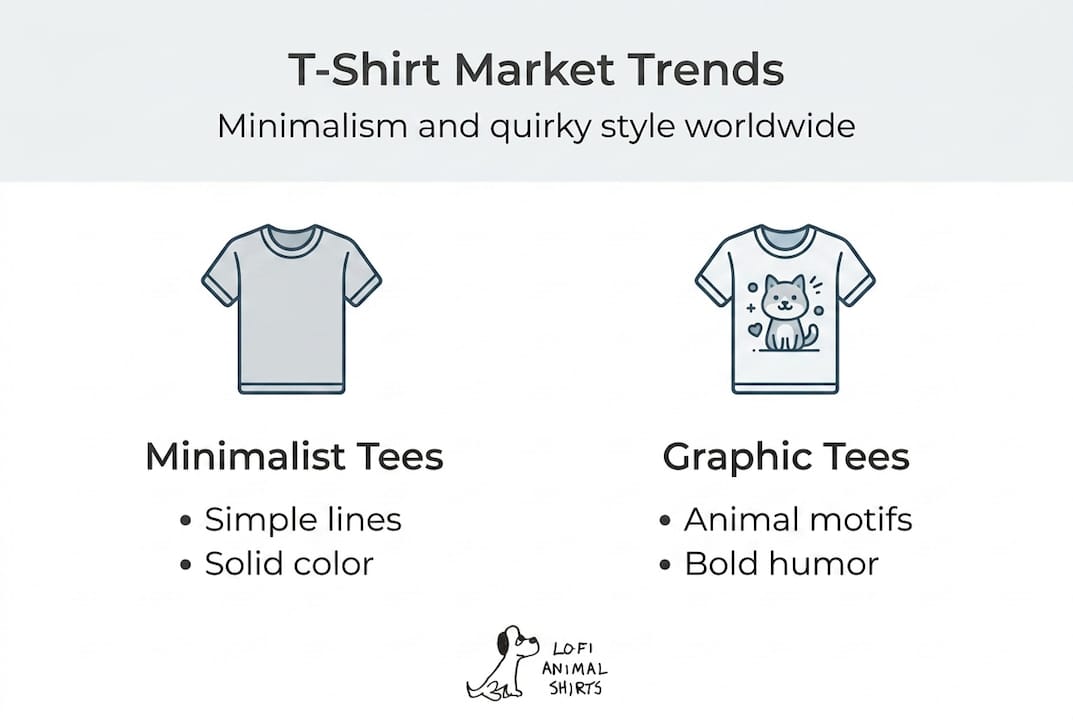
Here is a quick look at how the major segments break down:
| Segment | Key driver | Market share |
|---|---|---|
| Graphic tees | Self-expression and nostalgia | ~38% of purchases |
| Plain and minimalist tees | Versatility and layering | High and growing |
| Organic cotton options | Sustainability demand | ~30% of material share |
| Kids and baby apparel | Gift market and brand loyalty | Fast-growing segment |
| E-commerce channel | Convenience and curation | Dominant growth driver |
What’s fueling all this? Casual fashion is winning everywhere. Remote work normalized comfort. Social media made personal style a daily performance. E-commerce let niche brands like those focused on quirky animal designs reach exactly the right audience without needing a mall storefront. The quirky animal shirt picks that would have seemed too specific for mass retail a decade ago are now exactly what consumers are actively searching for online.
Sustainability is also reshaping what people buy. Shoppers now ask where their cotton comes from and how long a shirt will last. This actually works in favor of well-designed, minimalist pieces because a thoughtfully crafted shirt with a simple line-art animal holds up better aesthetically (and often physically) than a trend-chasing graphic overloaded with detail. Following minimalist shirt trends is not just about looking good. It is also about buying smarter.
The takeaway here: t-shirts are not a commodity. They are a category with tremendous creative and economic energy, and the brands winning right now are the ones that understand why people buy them in the first place.
Minimalist vs. graphic tees: Which fits your personality?
Now that you know what’s trending, let’s break down which t-shirt styles actually match your vibe and lifestyle. The debate between minimalist and graphic tees is less about right and wrong, and more about knowing yourself.
Experts describe the t-shirt as a “democratic garment”, meaning it works as both a blank canvas and a high-fashion statement depending on how you approach it. That flexibility is exactly what makes choosing between minimalist and graphic styles feel confusing. So let’s clear it up.
Minimalist tees are defined by restraint. A single line drawing, one small motif, or a clean solid color. They work for almost every occasion and pair easily with everything from tailored trousers to denim. Their power comes from subtlety. A shirt with a tiny, perfectly placed cat outline says more through understatement than a loud print ever could. Want to see how this plays out in practice? The explained minimalist vs. graphic tees breakdown shows exactly where each style shines.
Graphic tees are the opposite. They want to be noticed. Bold illustrations, unexpected animal mashups, typographic humor. These shirts start conversations before you open your mouth. A T-Rex trying to pick up something it can’t reach? People will comment. That is the whole point.
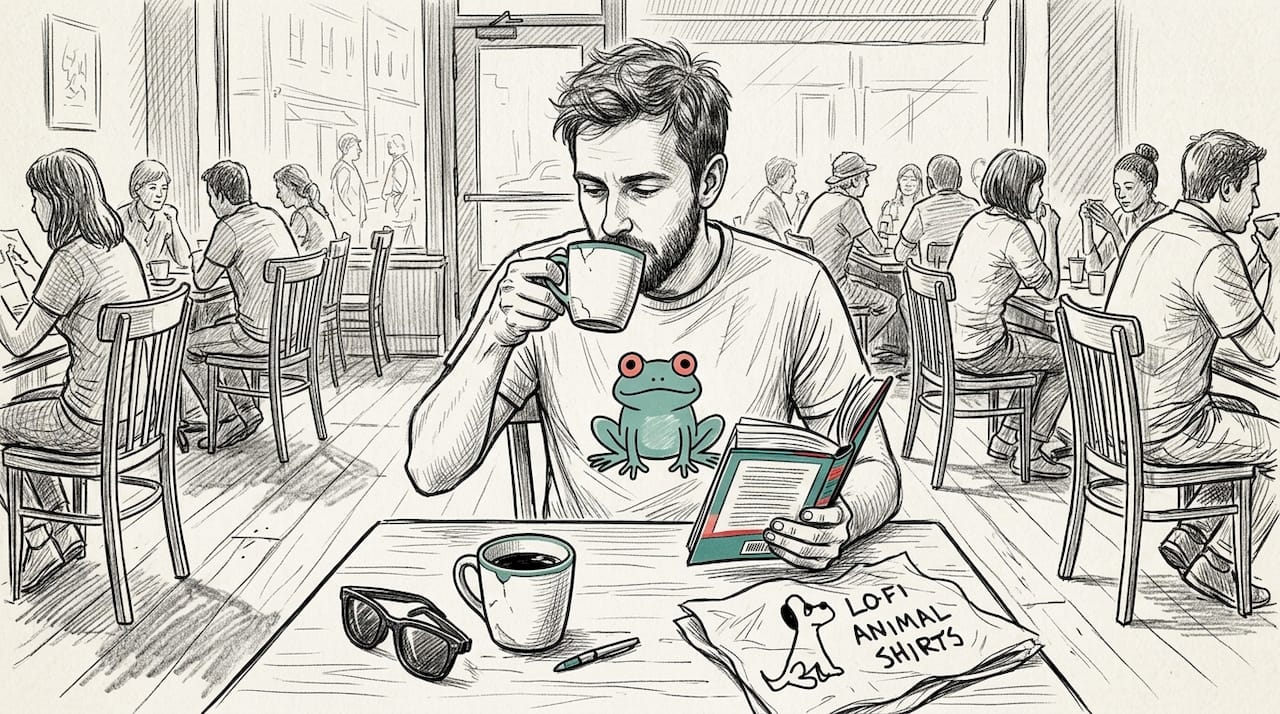
Here’s a comparison to help you decide:
| Factor | Minimalist tee | Graphic tee |
|---|---|---|
| Best occasion | Work casual, date night, travel | Weekends, events, casual outings |
| Styling ease | Pairs with almost anything | Works best as the focal point |
| Statement level | Subtle and personal | Bold and public |
| Longevity of look | Timeless | Trend-sensitive but can be ironic |
| Conversation starter | Rarely | Almost always |
Here’s a practical way to think about which style to reach for:
- Check your mood. Feeling expressive and energetic? Grab the graphic tee. Want to feel put-together without overthinking it? Minimalist wins.
- Consider the audience. A quirky penguin tee works brilliantly at a creative agency. It might raise eyebrows at a formal client meeting. Know your room.
- Think about what else you’re wearing. A minimal line art shirt layers brilliantly under an open jacket or over a long sleeve shirt. A bold graphic tee needs breathing room and simpler pieces around it.
- Ask if the design still makes you smile after a week. If it does, it has staying power. If it already feels dated, it was a trend, not a statement.
- Consider the animal. Seriously. A minimalist giraffe outline reads elegant. A giraffe doing something absurd reads playful. Both are valid. Both are very different shirts.
Pro Tip: If you want the best of both worlds, look for designs that use a simple illustration style but feature an animal in an unexpected or funny scenario. That combination gives you minimalist aesthetics with graphic personality, which is genuinely hard to pull off and even harder to forget.
Want to dig into why wearing animals on your clothes is such a bold move? The express your playful side perspective is worth reading before your next shopping decision.
Humor and originality: How quirky animal tees change the game
Both minimalist and graphic t-shirts add real value to a wardrobe. But quirky animal shirts occupy a specific and unusual niche. They do something neither category does alone: they make people laugh and feel something at the same time.
This is not accidental. Research into dopamine-hit humor shows that t-shirts enable a kind of “permission culture” where wearers feel free to express personal nostalgia, inside jokes, and playful identity without any verbal explanation required. Quirky animal designs specifically use what psychologists call the incongruity theory of humor, which basically means: put two things together that shouldn’t logically go together (say, a very serious-looking frog wearing a business suit), and the brain produces a small hit of delight.
That delight is contagious. People see it, they react, and suddenly you’ve made a connection with a stranger over a cartoon amphibian. That is the magic.
Here’s why quirky animal tees work so well as style tools:
- They are immediate conversation starters. You don’t need a witty opening line when your shirt has already delivered one.
- They signal that you don’t take yourself too seriously. In a world full of people trying to look impressive, that is genuinely refreshing.
- They tap into nostalgia. Animals have been in human art and storytelling forever. A hand-drawn T-Rex connects to something primal and childlike in the best possible way.
- They age well ironically. A shirt that was funny five years ago can be funny again because the humor is built into the concept, not the trend.
- They work for gifting. Few things communicate “I actually know your personality” better than a shirt featuring someone’s spirit animal doing something absurd.
The layered colorful t-shirt trend sweeping through 2026 style moments has also given quirky tees a new context. Celebrities and fashion figures are wearing graphic and illustrated tees under sheer sweaters, layered over long sleeves, and paired with tailored pieces. This means even the boldest animal tee can slot into a more dressed-up look without looking out of place.
Understanding why ironic animal shirts work comes down to this: irony in fashion requires confidence, and confidence is always stylish. And if you want to know exactly which animal humor styles are landing hardest right now, the animal pun shirt checklist breaks down design and humor trends in a very satisfying way.
Pro Tip: When wearing a quirky animal tee, keep everything else understated. Simple jeans, clean sneakers, no competing prints. Let the shirt be the whole personality of the outfit. It earns that role.
The uncomfortable truth: Why t-shirt rules are meant to be broken
Here’s what most fashion advice gets wrong about t-shirts: it still tries to put them in a box. Wear graphic tees casually. Keep minimalist tees for layering. Match your style to your occasion. Follow the rules.
But t-shirts built their entire cultural identity by rejecting exactly that kind of thinking. Brando didn’t wear his white tee because it followed the rules. He wore it because it didn’t. And the most interesting wardrobes we’ve ever seen are built by people who mix signals on purpose.
A minimalist shirt with one tiny, weird animal paired with a blazer? That’s a look. A bold frog graphic under a structured trench coat? Also a look. The problem isn’t choosing between minimalist and quirky. The problem is thinking you have to choose at all.
We’ve spent years watching how people actually wear our shirts versus how they think they should wear them. The customers who look most effortlessly stylish are almost always the ones who ignored the unwritten rules entirely. They wore the T-Rex shirt to the gallery opening. They layered the minimalist cat tee under a wool coat in January. They dressed their toddler in a penguin graphic and matched it with their own penguin crewneck because why not.
The history of quirky tees shows clearly that every time society tried to define what a t-shirt was “for,” someone came along and proved the definition wrong. That pattern is not changing. It’s accelerating.
So here’s our actual advice: stop asking whether a shirt is appropriate. Start asking whether it’s you. Because a t-shirt that makes you smile every time you put it on is always the right choice.
Find your perfect tee: Minimalist and quirky shirts for every mood
Ready to upgrade your t-shirt game? Here are standout options for every style preference and mood.
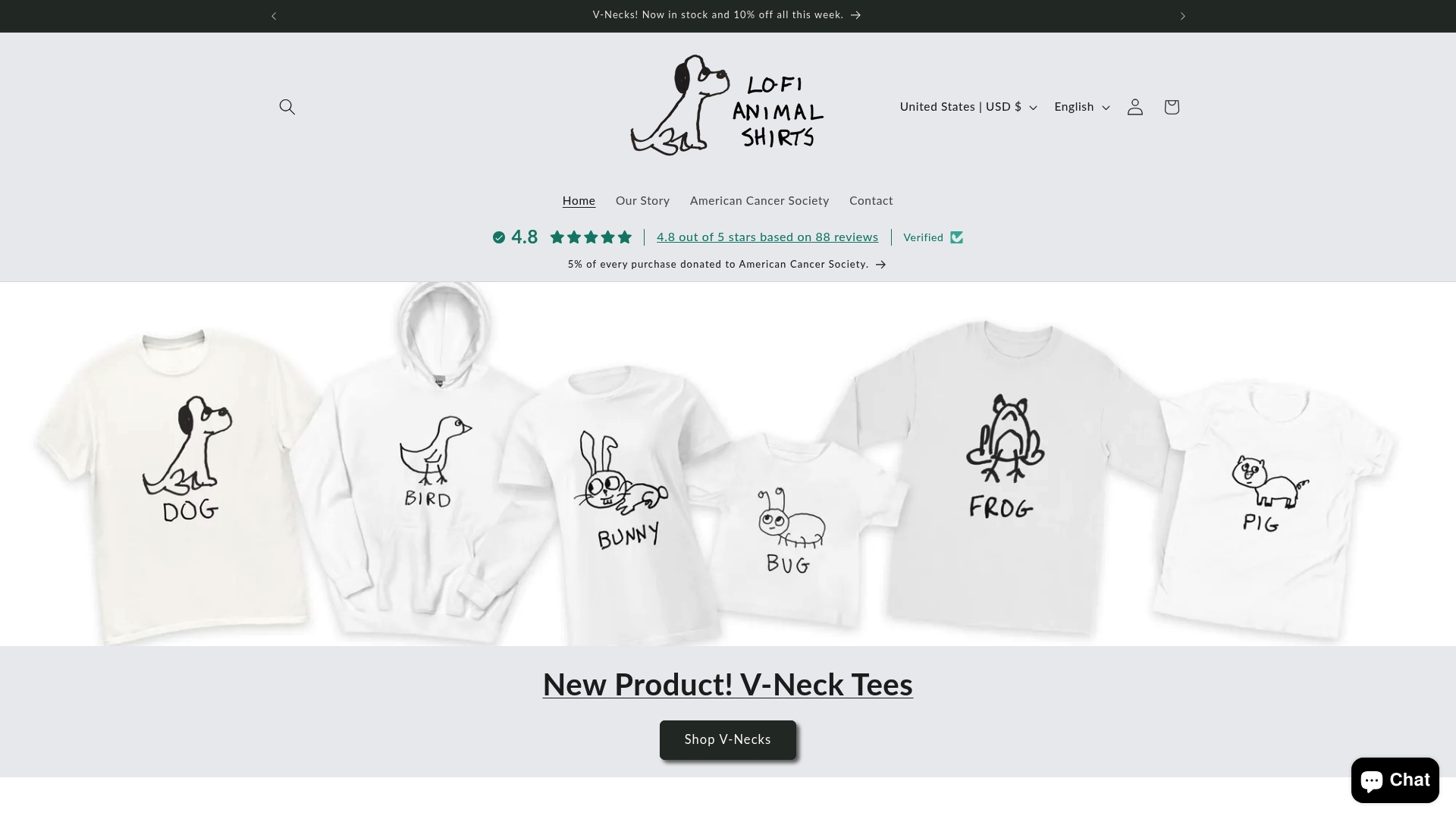
Whether you’re drawn to quiet, understated pieces or loud animal humor, there’s a shirt here for you. The minimalist cat crewneck sweatshirt delivers that perfectly balanced look where the illustration does just enough without overwhelming the outfit. For year-round layering, the minimalist cat long sleeve tee is the kind of versatile piece that works under a jacket in winter or alone in spring. And if you’re shopping for the youngest members of your crew, the baby animal tees and toddler animal tees collections bring the same hand-drawn quirky energy to the tiniest wardrobes. Because honestly, a baby in a minimalist penguin tee is the most stylish thing in any room.
Frequently asked questions
Why are t-shirts considered a “democratic” garment?
T-shirts are affordable, accessible, and serve as blank canvases for both high fashion and deeply personal expression, making them equally relevant across every income level and subculture, as noted by fashion historians.
How do quirky animal tees boost originality?
They use humor and unexpected animal scenarios to create memorable style moments, leveraging what researchers call incongruity theory to produce dopamine-driven self-expression that feels genuine rather than trend-chasing.
Are minimalist t-shirts still on trend in 2026?
Absolutely. Minimalist tees remain timeless, particularly for layering, with the 2026 colorful layering trend showing simple tees worn under bright sweaters and structured coats as a primary style approach.
What percentage of t-shirt purchases are graphic designs?
About 38% of all t-shirt purchases involve graphic designs, confirming that bold, illustrated styles remain a dominant force in casual fashion.
Can you mix minimalist and quirky animal tees in one outfit?
Yes, and it often produces the most interesting looks. Try a minimalist animal tee as the base layer and add one bold accessory, or reverse it with a graphic tee as the focal point surrounded by clean, simple pieces.
Leave a comment