

TL;DR:
- Animal t-shirts originated in the 1950s as tourist souvenirs and evolved into a global fashion icon.
- They have transitioned from bold, colorful designs to minimalist, humorous graphics driven by internet culture.
- These shirts serve as a form of self-expression, connecting people through humor, symbolism, and cultural shifts.
Animal t-shirts feel like a modern internet obsession, something born from meme culture and print-on-demand websites. But that assumption is completely wrong. These playful, graphic tees have roots stretching back to the 1950s, shaped by tourist culture, pop art, parody movements, and the psychology of self-expression. What started as a simple souvenir has grown into a global fashion staple that crosses generations, aesthetics, and cultural moments. If you’ve ever reached for a shirt featuring a deadpan penguin or a minimalist T-Rex, you’re participating in a tradition far richer and stranger than you might expect.
Table of Contents
- Origins of animal t-shirts: From tourist souvenirs to mainstream fashion
- From parody to pop: The rise of humorous and minimalist animal designs
- Animal prints and symbolism: Fashion, psychology, and cultural shifts
- The digital revolution: Memes, marketplaces, and the global boom in animal tees
- Why animal t-shirts endure: Self-expression, humor, and connection
- Why the history of animal t-shirts is more than just a fashion fad
- Explore unique animal t-shirts for every personality
- Frequently asked questions
Key Takeaways
| Point | Details |
|---|---|
| Early roots in tourism | Animal t-shirts began as souvenir items in the 1950s-60s, blending novelty with casual fashion. |
| Humor and versatility | From parody graphics to internet memes, animal tees reflect personal expression and cultural trends. |
| Symbolic power | Animal prints and graphics offer psychological and cultural benefits, fostering confidence and fun. |
| Digital era explosion | Ecommerce and social media democratized quirky animal t-shirt designs, fueling a global boom. |
Origins of animal t-shirts: From tourist souvenirs to mainstream fashion
Let’s travel back to where these popular tees began.
Animal graphic t-shirts emerged in the 1950s and 1960s as souvenir items sold at tourist destinations featuring animals, think zoos, aquariums, and wildlife parks. Visitors wanted something tangible to take home, and a shirt printed with a local animal became the perfect memento. These early designs were bold, colorful, and often a little goofy, which was entirely the point.
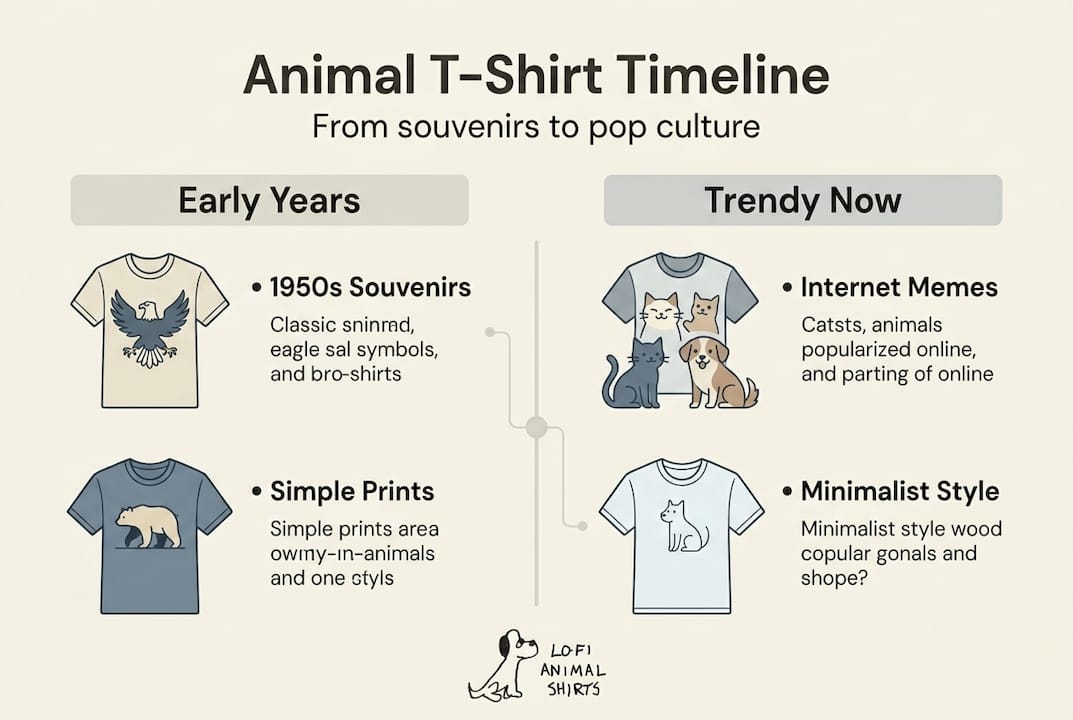
The technology that made this possible had been developing for decades. Graphic tees were enabled by World War II military stenciling techniques, 1950s Disney character licensing, and the invention of plastisol ink in 1959. Plastisol was a game changer. It allowed vivid, durable prints on cotton fabric, making it practical and affordable to mass-produce graphic shirts. Animal motifs fit perfectly into this novelty-driven graphic evolution because they were universally recognizable and emotionally appealing.
Disney’s licensing deals in the 1950s introduced characters like Dumbo and Bambi onto everyday clothing, normalizing the idea that animals belonged on shirts. This wasn’t just for kids. Adults wore Mickey Mouse tees at theme parks without a second thought, because the shirt was a souvenir first and a fashion statement second.
“The earliest animal tees weren’t about fashion credibility. They were about joy, memory, and the novelty of wearing something that made you smile.”
Here’s a quick look at how early animal tees evolved through the decades:
| Era | Key development | Animal motif style |
|---|---|---|
| 1950s | Souvenir culture, early screen printing | Simple, bold wildlife illustrations |
| 1960s | Disney licensing, pop art influence | Cartoon animals, bright colors |
| 1970s | Iron-on transfers, self-expression boom | Expressive, personalized designs |
| 1980s | Parody and novelty brands | Humorous, logo-spoofing animals |
What made these early shirts so compelling was their accessibility. You didn’t need to be a fashion insider to wear one. You just needed to visit a zoo gift shop or a beach boardwalk. The history of quirky animal tees shows that this democratic appeal has always been central to the style.
Key reasons animal tees caught on so quickly in this era:
- They were affordable and widely available at tourist locations
- Animal imagery transcended language and cultural barriers
- Novelty prints appealed to both children and adults
- Screen printing made personalization possible at scale
- They doubled as wearable souvenirs with emotional value
Even in these early years, animal tees were doing something more interesting than just decorating a shirt. They were telling a story about where you’d been and what made you laugh.
From parody to pop: The rise of humorous and minimalist animal designs
As animal tees gained momentum, humor and personal taste became central.
By the 1970s and 1980s, iron-on transfers popularized self-expression with animal designs in a way that felt personal rather than commercial. You could walk into a mall kiosk and choose your own graphic, your own animal, your own message. This shift from souvenir to self-expression was significant. The shirt stopped being about where you went and started being about who you were.
One of the most memorable examples of animal tee humor in the 1980s was Croc O’ Shirt, a parody brand that featured a dead crocodile logo, directly mocking the iconic Lacoste alligator. It was absurd, irreverent, and wildly popular. This kind of parody signaled that animal tees had cultural weight worth poking fun at. You can’t parody something nobody cares about.
Then came the internet, and everything accelerated. The internet era exploded funny animal t-shirts through viral memes like Grumpy Cat and Doge, turning specific animal personalities into cultural icons almost overnight. Print-on-demand platforms made it possible for anyone to turn a meme into a wearable shirt within hours. The result was an explosion of quirky, minimalist designs that leaned into deadpan humor rather than bold graphics.
Here’s how the visual style shifted across these eras:
| Style era | Design approach | Humor type | Typical buyer |
|---|---|---|---|
| 1970s-80s iron-ons | Bold, colorful, expressive | Playful, loud | Mall shoppers, teens |
| 1990s novelty tees | Logo parodies, pop culture | Satirical, ironic | Young adults |
| 2000s+ meme era | Minimalist, deadpan, simple lines | Dry, absurdist | Internet-savvy shoppers |
The shift toward minimalism wasn’t just aesthetic. It reflected a change in how people wanted to express humor. Loud graphics felt dated. A simple line drawing of a frog with a knowing expression felt smarter, more confident, and more personal. The animal pun shirt checklist captures exactly this evolution, showing how wordplay and understated visuals now dominate the space.
How to pick a design that stands out in modern settings:
- Choose a concept that works without explanation
- Favor clean lines over busy backgrounds
- Look for designs that feel clever rather than loud
- Consider how the shirt reads from a distance
- Pick an animal that reflects your actual personality
Pro Tip: If you need to explain the joke on your shirt to someone, the design probably isn’t doing its job. The best animal tees land instantly, like a good punchline.
The deadpan animal shirt guide breaks down exactly why understatement works so well in this format. And if you want to understand why cute ironic animal shirts have such staying power, the answer lies in how they balance warmth with wit.
Animal prints and symbolism: Fashion, psychology, and cultural shifts
Beyond graphics, animal prints added another dimension to t-shirt culture.
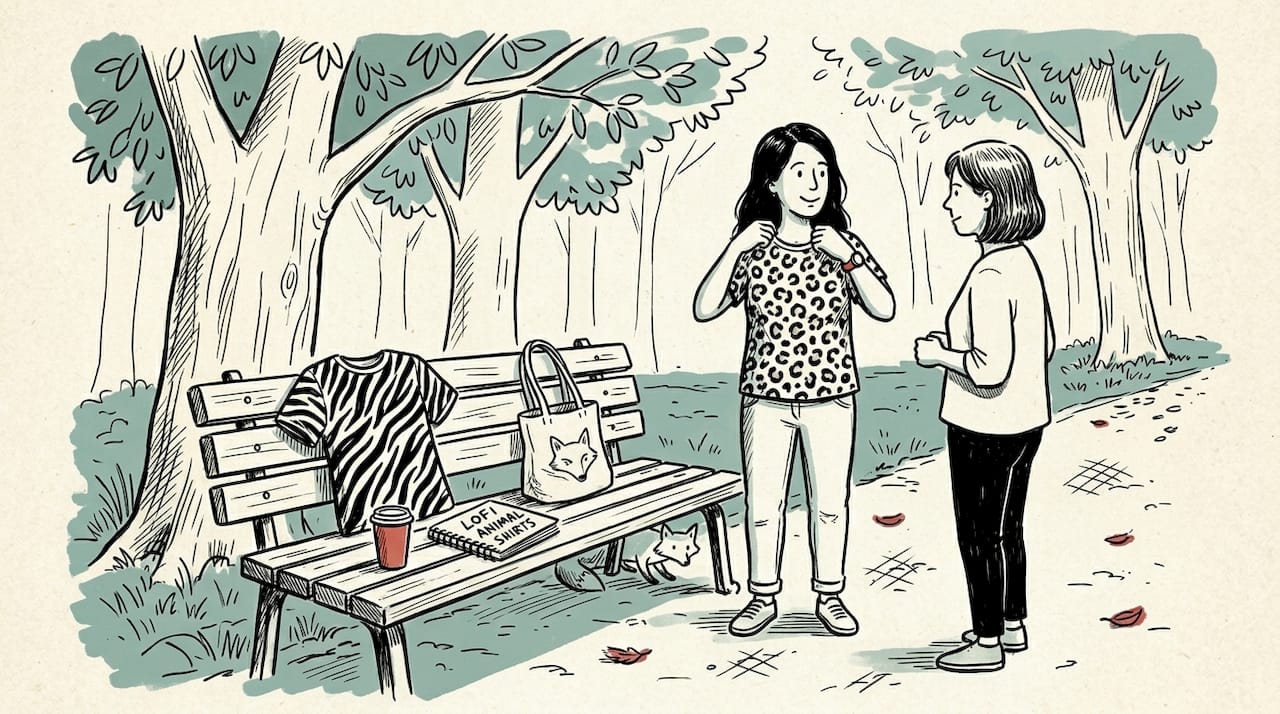
Animal print fabrics trace back to ancient symbolism, but printed textiles became commercially popular from the 1940s onward, with Vanity Fair introducing leopard print intimates in 1952 and Christian Dior featuring animal prints on the 1947 runway. These weren’t casual choices. Animal prints carried deliberate messages about power, sensuality, and status.
The psychological pull of animal prints is well documented. Wearing leopard or zebra patterns connects the wearer to something primal, something untamed. Psychologists describe this as a form of symbolic self-completion, using clothing to project qualities you admire or aspire to. Confidence, boldness, and a refusal to blend in are all wrapped up in a single printed pattern.
The cultural perception of animal prints has shifted dramatically over the decades. In the 1950s and 1960s, leopard print was considered glamorous and high fashion. By the 1980s, it had been adopted so broadly that critics called it tacky or excessive. Then it cycled back to cool again in the 1990s and 2000s, reclaimed by fashion designers and streetwear brands alike. This cycle of luxury to “trashy” to ironic reclamation is a pattern that runs through nearly every bold fashion statement.
Symbolic meanings behind popular animal prints:
- Leopard: Confidence, independence, and sensuality
- Zebra: Individuality within a group, standing out while fitting in
- Tiger: Strength, ambition, and fearlessness
- Snake: Mystery, transformation, and edge
- Cow print: Playfulness, humor, and approachability
Pro Tip: Animal prints work best when worn as a focal point. One bold printed piece paired with neutral basics keeps the look intentional rather than overwhelming.
The animal graphics and self-expression angle is just as relevant for prints as it is for graphic tees. Both formats use animals as a visual shorthand for personality, which is exactly why they’ve remained relevant across so many different cultural moments.
The digital revolution: Memes, marketplaces, and the global boom in animal tees
With digital access, buying and creating animal tees became truly global.
The internet era transformed funny animal t-shirts through viral memes, puns, and platforms like Etsy and Redbubble, giving independent designers a direct path to global audiences. Before this, getting a quirky animal shirt meant hoping your local mall had something decent. After this, you could find a shirt featuring a philosophical giraffe or a melancholy penguin in about thirty seconds.
“Print-on-demand didn’t just change how animal tees were sold. It changed who got to design them, and that opened up a creative space that mass production never could.”
The numbers reflect this shift clearly:
| Platform era | Key feature | Impact on animal tees |
|---|---|---|
| Pre-internet (pre-2000) | Physical retail only | Limited regional variety |
| Early internet (2000-2010) | Online storefronts | Wider selection, niche designs |
| Meme era (2010-2018) | Viral sharing, print-on-demand | Explosion of humor-driven designs |
| Current era (2018+) | Social commerce, direct-to-consumer | Personalized, community-driven collections |
Memes gave specific animals distinct personalities that designers could build on. Grumpy Cat embodied relatable frustration. Doge captured absurdist optimism. These weren’t just funny images. They were cultural archetypes that people genuinely identified with, which made wearing them feel like a form of self-identification rather than just a joke.
What makes a successful modern animal tee:
- A clear, simple concept that reads at a glance
- Humor that feels knowing rather than desperate
- A hand-drawn or slightly imperfect aesthetic that signals authenticity
- Minimal text, letting the image carry the weight
- An animal that has genuine personality in the design
The minimalist animal tees explained approach captures exactly what this era demanded. Less visual noise, more personality per square inch.
Why animal t-shirts endure: Self-expression, humor, and connection
So, what explains the staying power of animal tees through trend after trend?
The answer isn’t just nostalgia, though that plays a role. Animal tees endure because they solve a real problem in fashion: how do you express something specific about your personality without saying a word? A well-chosen animal shirt does that instantly. A shirt featuring a slightly smug-looking cat communicates something precise about your sense of humor that a plain colored tee simply cannot.
Animal prints carry a genuine psychological boost, connecting wearers to primal confidence and self-expression, even when the cultural perception swings between luxurious and ironic. This psychological function doesn’t go away with trends. It just changes its costume.
The shift from bold 70s and 80s iron-ons to internet-driven minimalist graphics shows that the format is flexible enough to absorb each new cultural moment without losing its core appeal. The animal is always the anchor. The style around it just evolves.
Why people keep reaching for animal tees, decade after decade:
- Animals are universally understood visual symbols
- They allow humor without aggression or controversy
- They create instant connection between people who share the same reference
- They work across age groups, making them great gifts
- They balance nostalgia with fresh creativity through new designs
- They’re a low-stakes way to take a fashion risk
“Animal tees aren’t a trend. They’re a format. And formats that serve a genuine human need don’t go away. They just get better.”
The animal tee collection benefits go beyond aesthetics. Building a small collection of animal tees gives you a rotating set of conversation starters, mood indicators, and personality signals that work in almost any casual setting. And if you’re looking for specific starting points, the quirky animal shirt picks and custom animal shirts for expression guides are worth exploring.
Why the history of animal t-shirts is more than just a fashion fad
With this history in view, the deeper meaning of animal t-shirts becomes clear.
Most people assume animal tees are a lighthearted, throwaway category of fashion. We’d argue the opposite. These shirts have consistently functioned as cultural mirrors, reflecting what people found funny, rebellious, nostalgic, or aspirational at any given moment. The tourist souvenir of the 1950s, the iron-on parody of the 1980s, and the deadpan meme shirt of today are all doing the same fundamental thing: letting the wearer say something about themselves without having to explain it out loud.
What’s striking is how the quirky animal tee history reveals a consistent thread of comfort and creativity working together. These shirts aren’t trying to be high fashion. They’re trying to be honest. And that honesty, wrapped in a little humor and a hand-drawn illustration, is exactly why they keep coming back.
The staying power isn’t accidental. It’s the result of a format that genuinely serves human needs for connection, humor, and self-expression in a way that feels effortless to wear.
Explore unique animal t-shirts for every personality
Ready to find your next favorite animal tee with a story?
At Lofi Animal Shirts, every design carries that same spirit of playful, minimalist self-expression that has driven animal tees for decades. Whether you’re shopping for yourself or looking for something genuinely original for a younger fan, the collection covers every personality type.
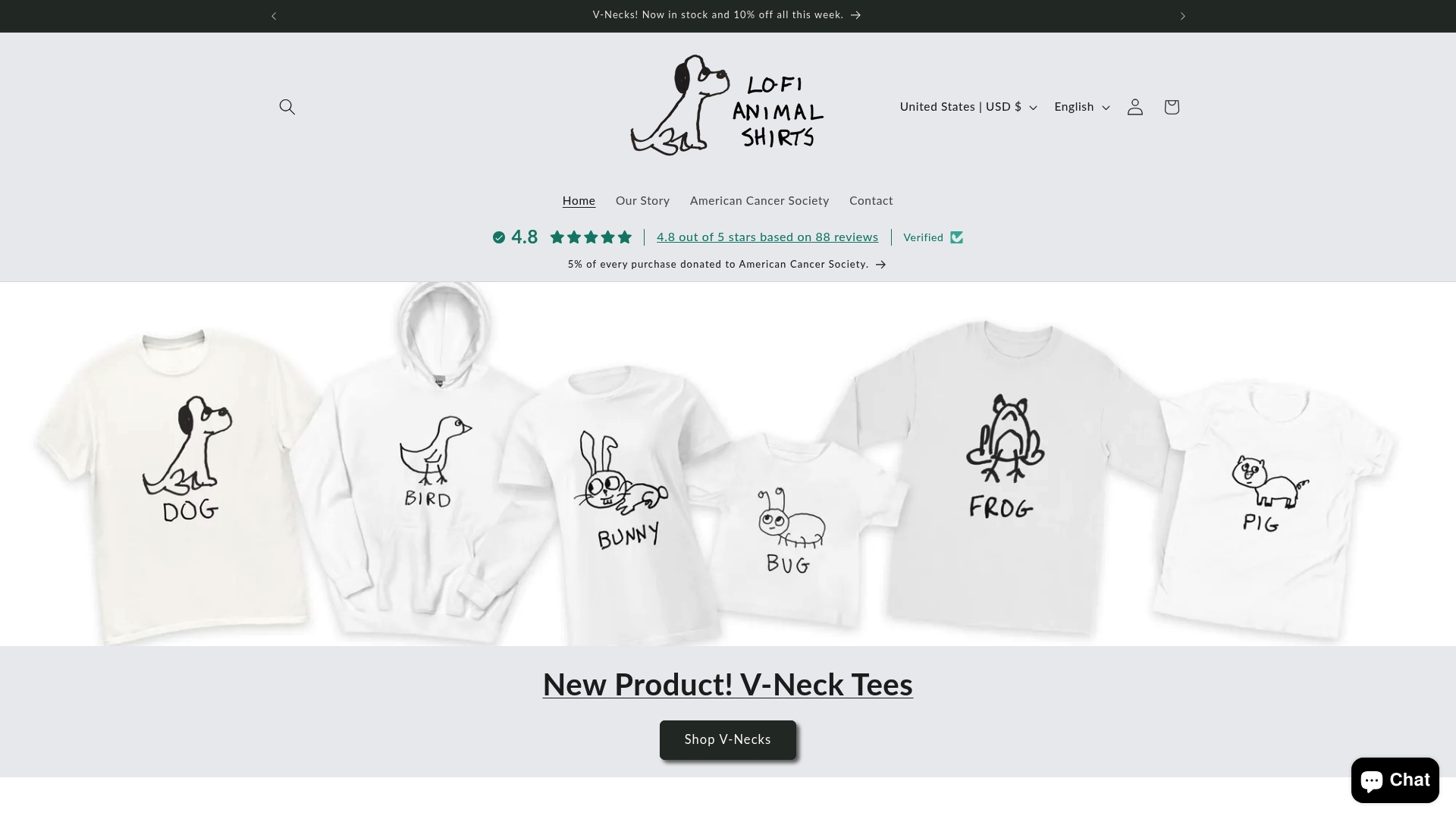
The Penguin Toddler Tee and Penguin Kids Tee bring that deadpan charm to the youngest members of your crew, because great design has no age limit. Browse the full Kids & Babies collection to find hand-drawn animal illustrations that are funny, soft, and built for real life. Every shirt is a conversation starter, a tiny wearable personality statement, and honestly, a pretty good reason to smile.
Frequently asked questions
When did animal t-shirts first become popular?
Animal t-shirts gained popularity in the 1950s and 1960s as souvenir items at tourist destinations like zoos and wildlife parks, long before internet culture made them mainstream.
Why are animal t-shirts considered stylish?
Animal t-shirts blend humor, symbolism, and individuality in a way that feels personal rather than generic. The shift from bold iron-ons to minimalist graphics shows how the format has continuously adapted to what people find cool and expressive.
What makes animal print t-shirts different from graphic animal tees?
Animal print t-shirts use repeated patterns inspired by animal skin or fur, while graphic tees display illustrations or images of animals directly. Animal prints trace to ancient symbolism and carry distinct psychological associations, while graphic tees lean more into humor and storytelling.
Are animal t-shirts just a recent internet trend?
Not at all. While internet memes supercharged their popularity in the 2000s, animal t-shirts have been a consistent part of casual fashion since the 1950s, evolving through each cultural era without ever fully disappearing.
Leave a comment