

TL;DR:
- Displaying graphic tees enhances daily interaction and showcases personality-driven clothing.
- Organized, vertical folding and creative wall displays make collections visually appealing and accessible.
- Family-friendly storage solutions include high hooks and dust-free bins for safety and space efficiency.
You open your drawer, paw through a collapsed stack of tees, and your favorite giraffe shirt is somewhere at the very bottom. Sound familiar? Most people treat their T-shirts like they’re ashamed of them, burying graphic tees under other clothes when they should be the first things you see every morning. If you own playful, personality-driven shirts, whether featuring a deadpan penguin or a philosophical frog, hiding them in a dark drawer is honestly a waste. The right display strategies turn your collection into something you actually interact with every day, making mornings easier and your space a whole lot more interesting.
Table of Contents
- What you need to display your T-shirt collection
- Folding and organizing T-shirts for eye-catching displays
- Creative wall and open display ideas
- Smart solutions for space limitations and families
- Our take: Why your T-shirt collection deserves to be seen
- Ready to grow your playful T-shirt collection?
- Frequently asked questions
Key Takeaways
| Point | Details |
|---|---|
| Showcase every design | Vertical and file-folding methods let you display graphics, not just store shirts. |
| Space-smart solutions | Wall displays and sectioned shelving keep even small apartments organized and stylish. |
| Safe and stylish for families | Clear bins and secure hanging options let parents display tees without worry. |
| Express your personality | Turn playful animal shirts into a gallery wall or home décor centerpiece. |
What you need to display your T-shirt collection
Now that you know why displaying your tees matters, let’s start with what you’ll need. Good displays don’t require a huge budget or a dedicated room. You need the right tools and a clear plan for your space.
Essential tools and supplies:
- Shelf dividers and drawer dividers (wire or acrylic both work well)
- Slim velvet hangers or wooden hangers for wall displays
- Wall-mounted hooks, pegboards, or floating shelves
- Clear plastic bins with lids for dust-free storage
- Rolling clothing racks for open-concept displays
- Cable ties or thin tension rods for small-space hacks
Space planning matters just as much as picking the right rack. When it comes to shelving, shelf spacing of 11-12 inches vertically accommodates three layers of folded T-shirts comfortably, and shelves should never span more than 36 inches without center support to avoid sagging under 15 to 20 pounds of folded fabric. That may sound technical, but think of it this way: a shelf that sags ruins the clean look you’re going for, and nobody wants their carefully folded animal-theme tee collection sliding onto the floor.
For drawer and shelf organization, use dividers every 6-8 inches to contain stacks and prevent toppling. Keeping graphic tees separated from plain solids is also a smart move because it makes visual selection faster, especially when you’re half-awake and trying to pick between the T-Rex doing yoga and the frog in a top hat.
| Display method | Best for | Approximate cost | Effort level |
|---|---|---|---|
| Drawer dividers | Compact apartments | $10 to $25 | Low |
| Floating shelves | Collectors and display lovers | $30 to $80 | Medium |
| Rolling rack | Large collections, renters | $40 to $120 | Low |
| Pegboard wall | Creative, high-traffic spaces | $25 to $60 | Medium |
| Clear bins with lids | Families with young kids | $15 to $40 | Low |
Busy parents and collectors have different priorities. Collectors may want open displays that show off every design, while parents with toddlers need solutions that keep shirts accessible to adults but out of reach or low-risk for curious little hands. For parents exploring choosing animal graphic tees for the whole family, a layered approach works best: open rack or shelf display for adult shirts, clear bins or higher hooks for kids’ pieces.
Pro Tip: To protect prints on graphic tees, always store shirts inside-out or face-down when folding. Direct friction on printed surfaces over time causes cracking and fading, especially on darker shirts with light-colored designs.
Folding and organizing T-shirts for eye-catching displays
With your tools ready, let’s master folding techniques that show off every tee. The way you fold makes an enormous difference in whether your collection feels like a curated wardrobe or a chaotic pile.
The KonMari (vertical file-fold) method, step by step:
- Lay your T-shirt flat on a clean surface, front side down.
- Fold one side (including the sleeve) inward toward the center of the shirt, about one-third of the width.
- Fold the sleeve back so it doesn’t stick out beyond the folded edge.
- Repeat on the other side, so you have a long vertical rectangle.
- Fold the bottom third upward, leaving a small gap below the collar.
- Fold that section upward again until you have a compact rectangle that stands on its own.
- Place the folded shirt upright in a drawer like a file in a filing cabinet.
The beauty of this approach is that vertical KonMari folding lets you see every graphic design without disturbing the rest of the stack. If you have a collection of animal-themed tees, you can actually read every design at a glance and pick the right mood for the day without pulling three shirts out to find the one you want. That’s a genuinely satisfying thing to experience in your morning routine.
Traditional horizontal stacking, on the other hand, buries everything. You see the top shirt and guess at everything below. It creates the exact problem we started with: the best shirt is always at the bottom.
| Folding method | Graphic visibility | Space efficiency | Time to fold | Best drawer type |
|---|---|---|---|---|
| Vertical file-fold (KonMari) | Excellent | High | 30 to 45 seconds | Deep or shallow drawers |
| Traditional horizontal stack | Poor | Medium | 20 to 30 seconds | Deep drawers only |
| Roll fold | Moderate | Very high | 20 to 30 seconds | Bins, travel bags |
| Flat horizontal | Poor | Low | 15 to 20 seconds | Wide shelves only |
Using the file-fold method where shirts stand upright like files in a cabinet makes your whole drawer scannable in about two seconds flat. You fold the sides to center, tuck the sleeves, fold the bottom up leaving a gap, and make that final fold into a self-supporting rectangle. It takes practice for about five minutes, then becomes automatic.
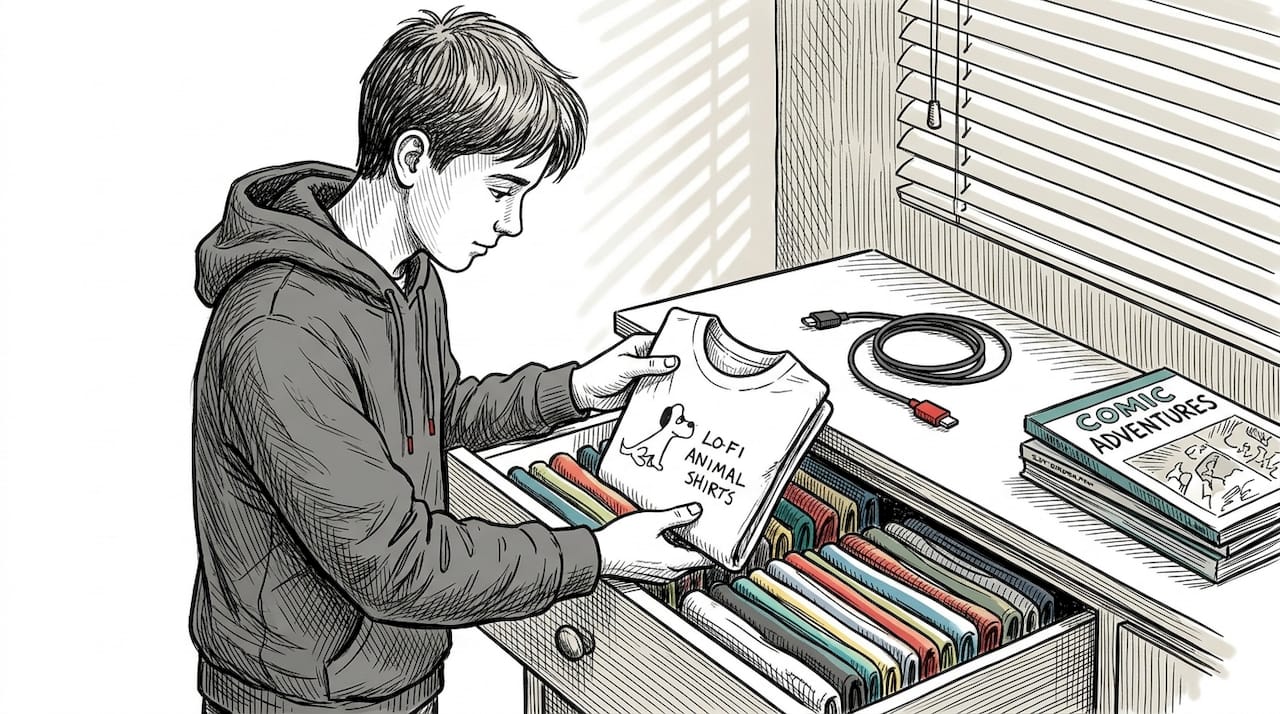
The data backs this up too: KonMari cuts search time and reduces duplicate purchases by around 30%, simply because you can actually see what you already own. How many times have you bought a shirt that turned out to be something you already had hiding in a drawer?
When organizing graphic tees, try organizing within the drawer by theme or color family. All animal tees together, organized from lightest to darkest, creates a visually satisfying and practically useful arrangement. You can also explore minimalist display strategies that pair well with the vertical fold for a clean, uncluttered look.
Pro Tip: Color-code your vertical drawer sections using colored binder clips or small sticky labels on the drawer edge, one color per category. It sounds fussy, but it takes about three minutes to set up and saves you ten minutes per week of rummaging.
Creative wall and open display ideas
Once your shirts are folded and sorted, try open display methods for style and function. This is where things get genuinely fun, especially if your tees have personality worth showing off.
Wall-mounted displays like geometric shelves, hooks, pegboards, and rolling racks transform your graphic tees into art pieces, which is exactly the right framing for anyone who owns shirts with character. A giraffe wearing sunglasses deserves better than the bottom of a drawer. It deserves wall space.
Popular open display options:
- Floating shelves with small rolled or folded tees on display: Great for a curated look, especially with two or three featured shirts.
- Pegboards with S-hooks and small hangers: Endlessly customizable, easy to rearrange, and very renter-friendly.
- Rolling racks with cascading hangers: Perfect for larger collections and adds a “boutique in my home” vibe that a lot of people genuinely love.
- Ladder-style clothing rails: Lean against any wall, hold several shirts, and look intentionally designed even when they’re budget-friendly.
- Shadow boxes with stretched tees: For truly special shirts you want to treat like framed artwork.
Gallery walls have become a huge part of millennial home styling, and there’s no rule that says you can’t make a T-shirt the centerpiece. Think of your animal tee collection as a rotating art show in your own home. Swap out shirts seasonally or based on your current mood. Put up the cozy frog shirt in fall and bring out the bright penguin shirt for summer. It costs nothing and completely changes the energy of a room.
“The best home gallery walls are the ones that tell your story in under five seconds. A rotating shirt display does exactly that.”
For families, open displays at adult height keep shirts safe from tiny grabby hands while still making your personality visible to anyone walking through the space. If you love funny animal shirt gallery walls, try hanging three shirts in matching frames or on coordinated wooden hangers for a polished, gallery-style effect.
Pro Tip: When rotating your wall display seasonally, take a quick photo of each arrangement before you change it. You’ll want to recreate that perfect combination six months later and won’t remember exactly how you did it.
Smart solutions for space limitations and families
If you have limited space or share your home with little ones, these strategies keep your collection safe and stylish. Small-space living doesn’t mean giving up on display creativity. It just means getting more intentional about it.
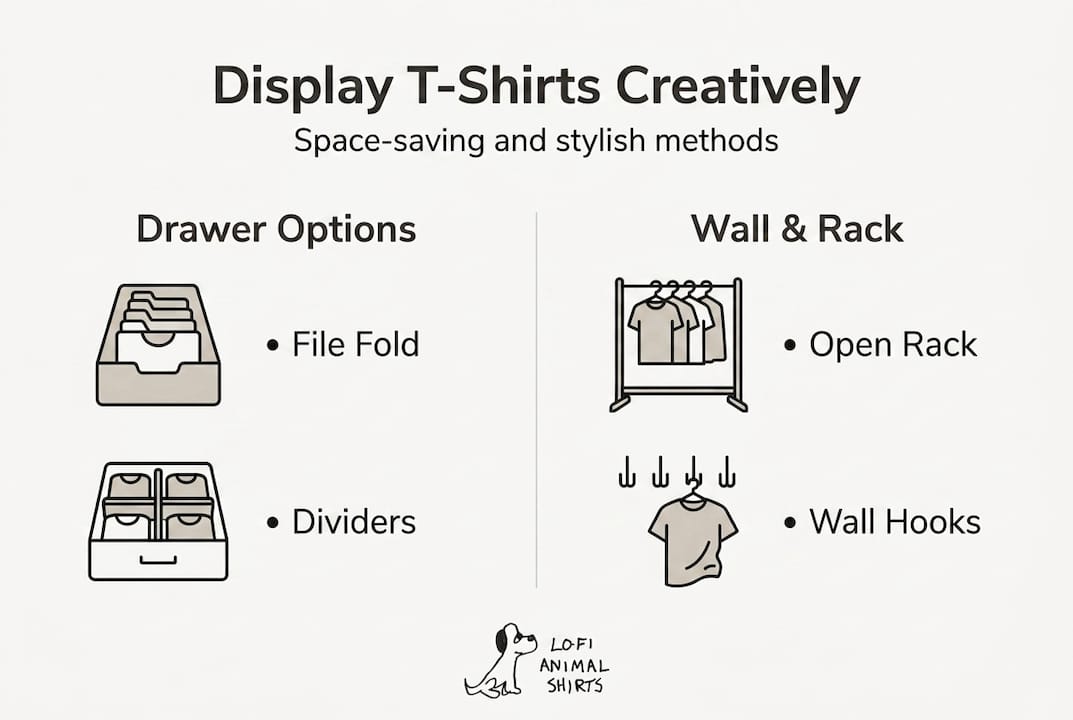
Vertical wall hangers, tension rods, and clear dust-free containers are the top three tools for small apartments and young parents who need both accessibility and safety. Each one solves a specific problem without taking up floor space or creating a tripping hazard.
Space-limited and family-friendly display options:
- Tension rods inside cabinet doors: Hidden storage with easy access, zero floor space used.
- Over-the-door organizers with clear pockets: Hold folded tees visible and sorted, great for kids’ rooms.
- High wall hooks: Keep adult graphic tees out of toddler reach while still on display.
- Rolling racks with brakes: Movable for cleaning, lockable for safety, great for large collections.
For large collections, more than 100 shirts risk drawer overflow, so rolling racks or multiple organized zones become necessary. Young parents in this situation often prioritize clear dust-free bins for kids’ items, since little ones are especially hard on clothing stored in open air environments.
| Storage solution | Space saved | Child safety | Visibility | Cost range |
|---|---|---|---|---|
| Vertical wall hanger | High | Medium | High | $15 to $35 |
| Clear bins with lids | Medium | High | Medium | $15 to $40 |
| Tension rod in cabinet | High | High | Low | $5 to $15 |
| Rolling rack | Low | Medium | High | $40 to $120 |
| Over-door organizer | High | High | Medium | $12 to $30 |
“For families with kids under 5, open low displays are an invitation for a game of ‘let me unfold everything.’ Dust-free bins or high-mounted hooks are your best friends.”
For matching family animal shirts, consider a dedicated family display zone: a short section of rolling rack or a set of hooks at three heights (adult, older child, toddler) so everyone’s personality-driven tees have a home. It makes mornings more fun and doubles as a genuinely sweet piece of everyday home decoration.
Our take: Why your T-shirt collection deserves to be seen
Here’s our honest opinion on a habit that quietly wastes a huge amount of joy: folding shirts into drawers and forgetting about them. Most organizing advice treats T-shirts as things to tuck away neatly. We think that’s exactly backwards, especially if your shirts have actual personality.
The conventional wisdom says a tidy home means hidden clothing. But a giraffe wearing a tiny scarf on your wall is not clutter. It’s a conversation starter, a mood-lifter, and a quick visual reminder that your home belongs to someone with a specific, wonderful sense of humor. That matters more than most people give it credit for.
Animal-themed tees in particular work brilliantly as everyday “soft art.” They’re not precious or fragile. They don’t need frames or climate control. They just need a hook and a little intention. We’ve seen parents turn a kid’s room into a genuinely joyful space with five shirts on wall hooks, rotated monthly. We’ve seen minimalists build a rolling rack display that looks like a boutique. None of it requires serious money or design skills.
Our actual recommendation is to alternate methods as your life changes. New apartment with tons of wall space? Go open rack and pegboard. New baby makes the living room chaotic? Shift to high hooks and clear bins for a while. Unique self-expression with custom shirts works best when your display method matches your current lifestyle, not the one you had two years ago.
Ready to grow your playful T-shirt collection?
Inspired to refresh your collection? Here’s how you can grow it even further. Now that you have the display strategies sorted, the fun part is filling those shelves and racks with shirts worth showing off.
At Lofi Animal Shirts, every design is made specifically for people who think their clothes should have a sense of humor. Whether you’re building out an open wall display or setting up a family folding station, you’ll want pieces that actually earn their wall space. For the little ones in your life, the Cat Baby Onesie and Cat Baby Tee bring the same deadpan charm to tiny wardrobes, while the Dog Baby Onesie keeps things minimal and adorable. Shop the full collection at Lofi Animal Shirts and find the tees that belong on your wall.
Frequently asked questions
What is the best way to fold T-shirts to show off the designs?
The vertical KonMari method lets you see every graphic design at a glance without disturbing the rest of your drawer stack, making it ideal for graphic tee collections. Once you get the fold right, it becomes the only way you’ll want to store your shirts.
How do I display T-shirts in a small apartment?
Vertical wall hangers, tension rods, and clear bins are the most space-efficient options for small apartments, saving floor space while keeping shirts visible and accessible. An over-the-door organizer with clear pockets is another underrated option worth trying.
Are open displays safe for young kids?
Wall-mounted options at adult height are generally safe, but dust-free clear bins are the most reliable choice for households with very young children who tend to pull at anything within reach. High hooks are a solid middle-ground that keeps shirts on display without putting them at toddler level.
How do I keep my T-shirts from sagging or getting wrinkled?
Use shelf dividers every 6-8 inches and keep shelf spans under 36 inches to prevent both sagging shelves and collapsing stacks. Vertical folding also reduces wrinkling compared to flat stacking because shirts don’t sit under the weight of everything placed on top of them.
Leave a comment