

TL;DR:
- Quirky animal clothing has roots in historical court jesters and Victorian novelty prints.
- Modern minimalist animal shirts are driven by irony, nostalgia, and evolving eco-conscious fashion trends.
- Wearing humorous animal garments fosters social connection and expresses individuality beyond surface novelty.
Quirky, animal-themed clothing feels like something the internet invented, but the truth is far stranger and more fascinating. Long before meme culture made “frog wearing a hat” a personality trait, humans were stitching humor, irony, and animals directly onto their bodies as a form of radical self-expression. The playful hand-drawn T-Rex or deadpan penguin on your favorite shirt carries centuries of cultural weight. This guide traces that journey from medieval jesters to modern minimalist animal tees, unpacking why these garments resonate so deeply and what makes them more than just a funny piece of fabric.
Table of Contents
- Historical roots of quirky clothing
- Quirky animal shirts: From joke to fashion movement
- Why quirky and animal-inspired clothing resonates today
- Modern trends and the future of quirky fashion
- A fresh take: Why quirky animal shirts are more than a fashion statement
- Where to find your next quirky animal shirt
- Frequently asked questions
Key Takeaways
| Point | Details |
|---|---|
| Deep historical roots | Quirky clothing has centuries-old origins, not just a modern fad. |
| Animal shirts are iconic | Animal graphic tees evolved from gag gifts to mainstream fashion statements. |
| Personal expression | Wearing quirky clothing is a fun, unique way to express identity and humor. |
| Trend resilience | Minimalist and animal-themed quirky looks consistently find new audiences and innovations. |
Historical roots of quirky clothing
The story of quirky fashion does not start with screen printing or pop-up shops. It starts in royal courts, where jesters wore patchwork suits of contrasting colors specifically designed to signal “I am different, and that difference has power.” Medieval jesters and Victorian novelty prints showcased the earliest forms of quirky attire, proving that humans have always used clothing to perform humor and subversion.
By the Victorian era, novelty had become a leisure pursuit. Wealthy families commissioned custom embroideries featuring animals, puns, and absurd scenes. Printed handkerchiefs with caricatures of animals in human situations were considered charming party favors. This was not accidental. Quirky clothing has always reflected what society finds funny, taboo, or worth poking fun at.
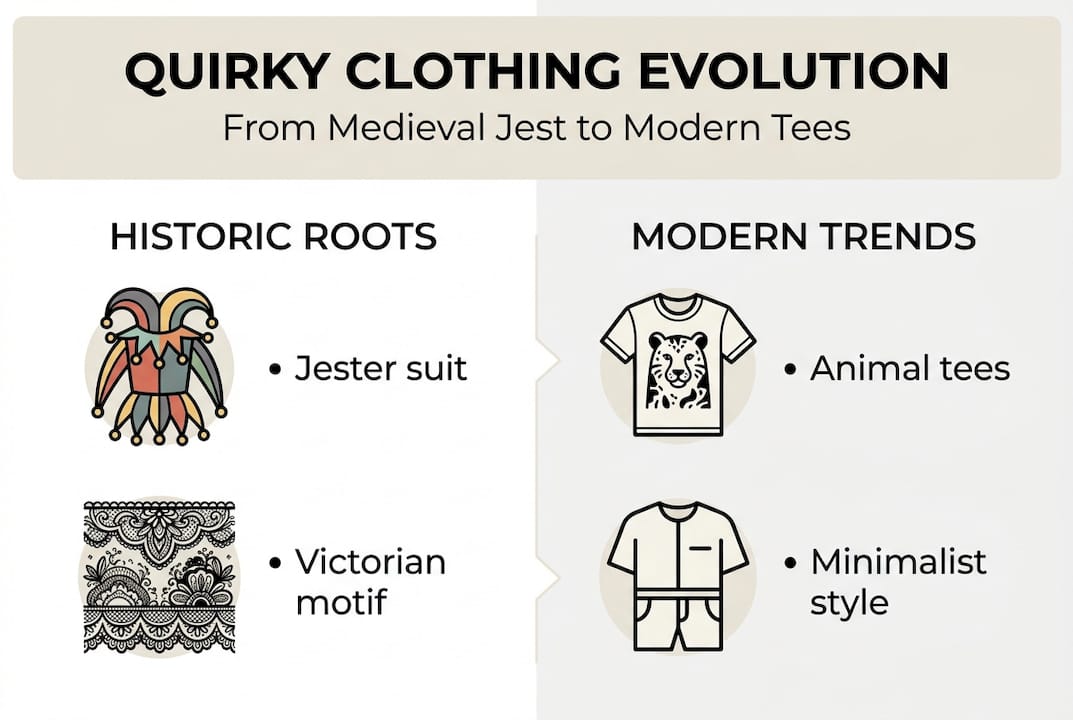
The 20th century turned the volume up considerably. Post-World War II consumer culture gave ordinary people access to bold prints and graphic designs. The 1950s brought novelty socks and patterned bowling shirts. By the 1960s, counterculture movements used graphic clothing as protest, absurdity, and identity all at once.
Key milestones in quirky fashion history:
- 1300s: Court jesters formalize patchwork and contrast as visual humor
- 1800s: Victorian novelty prints appear on handkerchiefs and accessories
- 1950s: Novelty prints enter everyday American casual wear
- 1960s-1970s: Counterculture makes graphic clothing political and personal
- 1980s: Animal graphic shirts hit mall stores and music merchandise
- 1990s: Irony becomes a core fashion language through grunge and indie culture
| Era | Quirky clothing form | Primary function |
|---|---|---|
| Medieval | Jester suits, patchwork | Social commentary, entertainment |
| Victorian | Novelty prints, embroidery | Leisure, wit, status |
| 1950s-60s | Printed shirts, patches | Identity, rebellion |
| 1980s-90s | Graphic tees, band shirts | Pop culture, humor |
| 2000s-now | Minimalist animal tees | Self-expression, community |
Animal motifs became particularly fashionable in the 1960s through 1980s, appearing on everything from children’s pajamas to adult souvenir tees. The graphic shirt went from being a tourist trinket to a deliberate style choice.
Pro Tip: When you look at a quirky shirt from any era, ask yourself what social attitude it was reacting to. That context usually reveals something surprising about why it still feels funny or relevant today.
Quirky animal shirts: From joke to fashion movement
Animal graphic shirts made a massive leap from novelty item to cultural touchstone during the 1980s and 1990s. Band merchandise, sports mascots, and theme park souvenirs all normalized the idea of wearing an animal on your chest. Then something shifted: the joke became the point.
Animal-themed shirts exploded in popularity with the rise of graphic tees in the late 20th century, fueled by pop culture’s growing appetite for irony and absurdity. By the time the internet arrived, meme culture gave animal shirts an entirely new dimension. A frog looking existential, a T-Rex struggling with tiny arms, a penguin in a tuxedo going nowhere fast. These were not random images. They were shared emotional shorthand.
How quirky animal shirts rose to icon status:
- 1980s mall culture normalized animal graphics on casual shirts
- Band and tour merchandise made graphic tees a collector’s item
- Streetwear designers elevated quirky prints into high-fashion territory
- Internet virality turned specific animal images into cultural symbols
- Social media created communities around shared animal aesthetics
- Minimalist design stripped the joke down to its most essential, clever form
Over 60% of millennials report owning at least one animal-themed graphic tee, a figure that reflects how deeply these garments embed themselves in wardrobes and identities alike. You can explore iconic animal shirts that have defined this movement, or dig into custom animal shirt insights to understand how personalization supercharges the appeal.
| Classic joke tees | Modern minimalist animal shirts |
|---|---|
| Bold colors, busy graphics | Clean lines, restrained palette |
| Text-heavy puns | Visual storytelling without words |
| Disposable humor | Timeless, wearable art |
| Trend-dependent | Design-forward and lasting |
| Often mass-produced | Often hand-drawn or small batch |
The evolution from loud novelty shirt to quiet, deliberate minimalist design is not just an aesthetic shift. It reflects a cultural maturation where wearing a funny animal is now a considered, intentional act of personality projection.
Why quirky and animal-inspired clothing resonates today
People do not just buy quirky animal shirts because they look cool. They buy them because they feel seen. There is real psychology behind this. Humor reduces social anxiety, and wearing something that makes a stranger smile creates an instant, low-stakes connection. That is a powerful social tool.
“Wearing quirky shirts is both a personal and social statement of humor and identity,” reflecting how ironic animal shirt appeal goes far beyond surface-level comedy.
Animal motifs specifically tap into nostalgia. The animals we loved as kids, frogs, dinosaurs, penguins, remain emotionally charged throughout adulthood. When a well-designed shirt features one of these creatures in an absurd scenario, it bypasses cynicism and hits something genuine. That emotional shortcut is rare in fashion.
Social situations where quirky animal shirts consistently shine:
- Casual weekend gatherings where you want to start conversations effortlessly
- Creative workplaces with relaxed dress codes
- Concerts, festivals, and markets where personal style is celebrated
- Gift exchanges when you want to give something genuinely memorable
- Family events where adults and kids can share a laugh
- Online profile photos where you want personality to come through immediately
The deeper meaning behind these shirts is explored thoughtfully in writing about minimalist animal tees meaning, which argues that restraint in design often amplifies emotional impact rather than reducing it.
Pro Tip: Choose an animal that genuinely makes you laugh or reflects something real about your personality. A shirt you actually connect with reads differently than one you just grabbed because it was on sale.
The most successful quirky shirts do not try to be universally funny. They aim for a specific kind of recognition, the feeling that someone made this for you specifically, even if thousands of other people feel exactly the same way.
Modern trends and the future of quirky fashion
Minimalism is not just a design trend in quirky fashion. It is a philosophy. Where 1990s graphic tees threw everything at the wall, today’s most sought-after animal shirts communicate through restraint. A single clean line drawing of a giraffe looking mildly inconvenienced says more than a shirt covered in text and neon colors ever could.
Minimalist graphics, eco-friendly prints, and digital personalization now shape quirky apparel trends, signaling a maturation in how consumers want to interact with humor in their clothing. The joke is still there. It just trusts you to find it.
Sustainability is reshaping the production side of quirky fashion just as decisively as aesthetics are reshaping the design side. Shoppers are asking harder questions about where shirts come from, what dyes are used, and whether the person who made it was treated fairly. Eco-conscious printing methods and organic fabrics are becoming expected, not exceptional.
| Design style | Current demand | Key audience |
|---|---|---|
| Minimalist animal tees | Very high | Millennials, Gen Z |
| Maximalist novelty prints | Moderate, niche | Retro enthusiasts |
| Illustrated fine-line art | Growing fast | Art-forward consumers |
| Custom personalized prints | Surging | Gift buyers, individuals |
Future trends reshaping quirky animal fashion:
- AR-enabled shirts that animate when viewed through a smartphone
- Ethical production transparency as a standard selling point
- Ultra-limited hand-drawn print runs that feel genuinely collectible
- Cross-species mashup designs that play with absurdist humor
- Collaborative artist drops where illustrators become the brand story
You can already see this shift in collections like meaningful quirky shirt gifts and in the craftsmanship visible in line art animal tees, where a single thoughtful illustration carries the entire emotional weight of the garment.
A fresh take: Why quirky animal shirts are more than a fashion statement
Here is what most fashion coverage gets wrong about quirky animal shirts: it treats them as a symptom of casualization, as if people stopped caring about fashion and just started wearing whatever made them giggle. That reading completely misses the point.
Wearing a hand-drawn frog in a trench coat is not the absence of seriousness. It is the presence of a very specific kind of intelligence. These shirts invite everyone into a cultural conversation that does not require money, status, or insider knowledge to join. A well-executed animal shirt can critique consumer culture, challenge the idea that fashion must be aspirational, or simply redistribute a moment of joy to every person who sees it.
Look at deadpan animal shirts and you will notice they often work through what they withhold. No punchline. No explanation. Just an animal, a situation, and the invitation to decide what it means. That is closer to art than most people give it credit for. Wearing humor on your sleeve, literally, is one of the most subversive things you can do in a fashion landscape obsessed with seriousness.
Where to find your next quirky animal shirt
If this deep dive into the history and meaning behind quirky clothing has you wanting to actually wear some of that personality, you are in the right place.
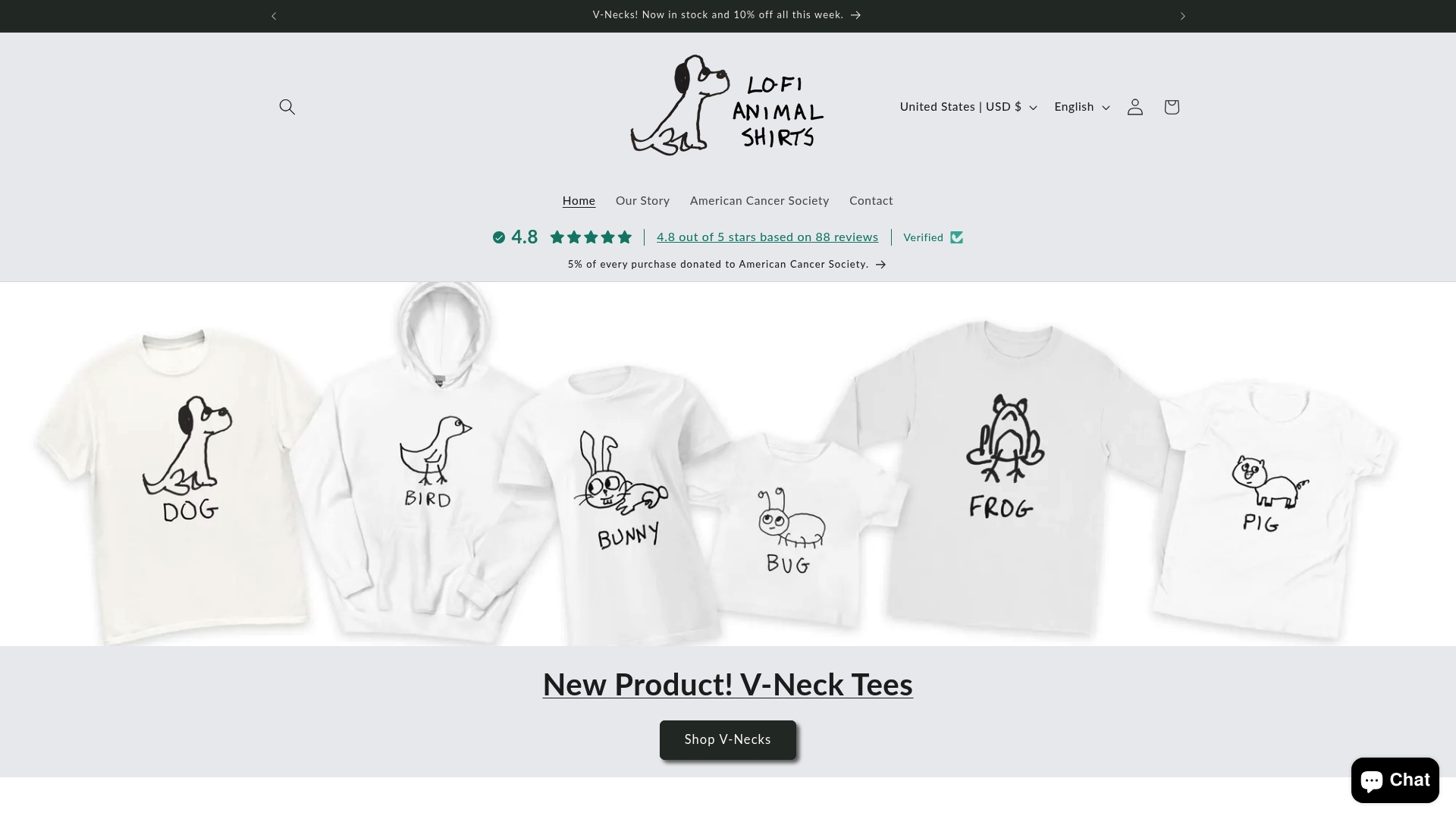
Lofi Animal Shirts offers a curated collection of hand-drawn, minimalist animal tees designed for people who appreciate exactly this kind of humor and intention. Whether you are shopping for yourself or hunting for a genuinely thoughtful gift, there is something for every age and sensibility. Browse baby animal shirts for the tiniest members of your crew, or check out toddler animal shirts for kids who are already developing a personality worth dressing up. The designs are simple, the humor is real, and nothing here takes itself too seriously.
Frequently asked questions
What is considered quirky clothing?
Quirky shirts use graphic, humorous designs that lean into irony, playful imagery, and unexpected combinations, with animal themes and bold personality being the most recognizable hallmarks.
Why are animal-themed shirts so popular in fashion?
Animal graphics invite instant, joyful reactions, combining nostalgia and visual humor into a single wearable image that communicates personality without saying a word.
How do I style quirky animal shirts?
Pair them with simple jeans or a solid skirt and layer with a clean, neutral jacket to let the shirt do the talking without overwhelming your whole look.
Are animal graphic tees still trendy?
Minimalist animal tees remain in demand because their blend of humor, nostalgia, and clean design keeps them feeling fresh across seasons and style cycles.
Can quirky clothing be sustainable?
Eco-friendly quirky shirts are gaining popularity as more brands commit to organic materials and ethical production, making it easier to wear something funny without the environmental guilt.
Recommended
- Must-Have Quirky Shirts: Standout Picks for Animal Lovers – LoFi Animal Shirts
- Why Cute Ironic Animal Shirts Work – LoFi Animal Shirts
- Minimalist Animal Graphic Tees, Explained – LoFi Animal Shirts
- Why a Dachshund Minimalist Shirt Works – LoFi Animal Shirts
- Why natural fabrics for pets enhance comfort and style – Teddy Pet
- 7 Beispiele für individuelle Hundekleidung mit Wow-Effekt – Pfotenpoesie